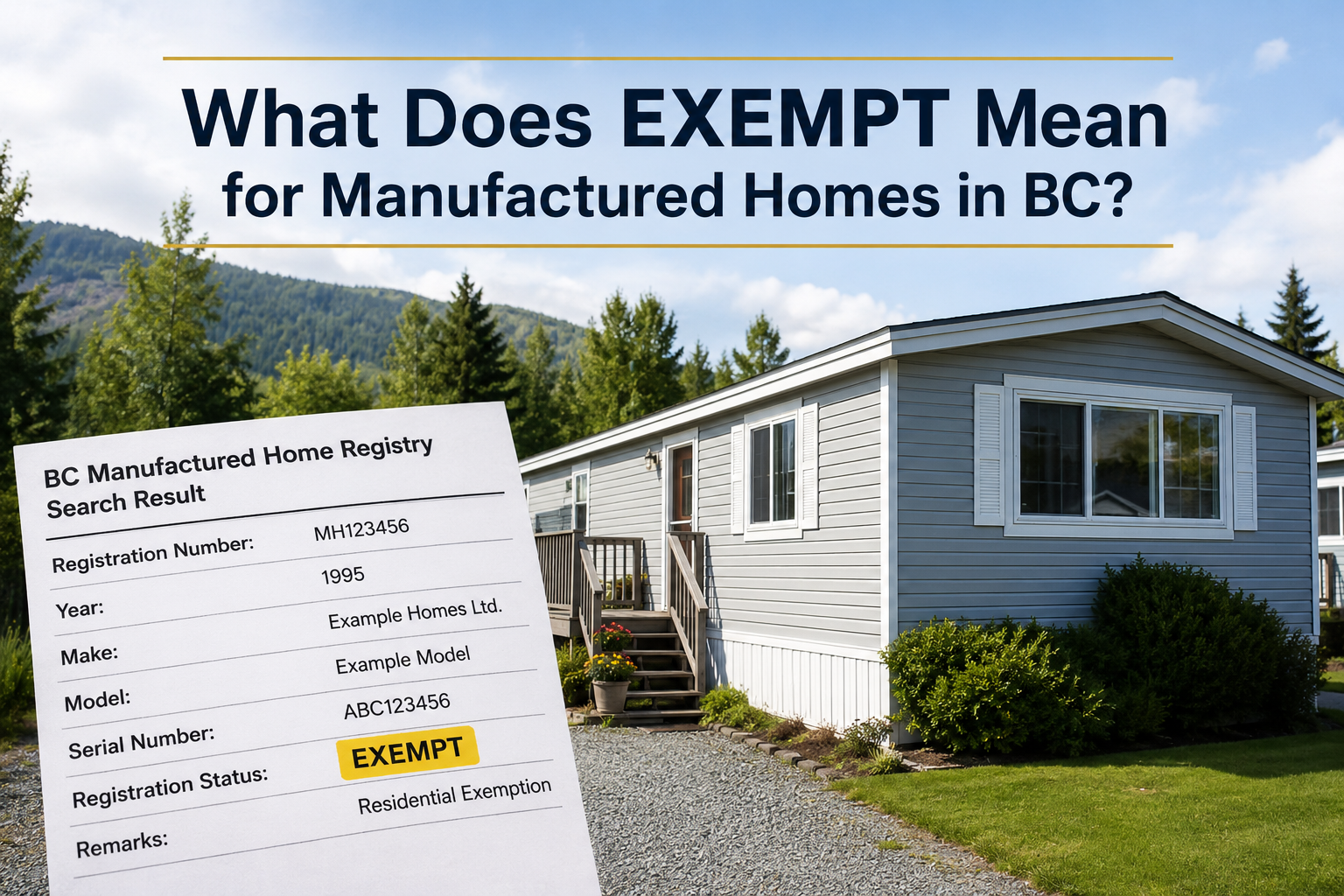
Buying or selling a property with a manufactured home in British Columbia? Understanding what “EXEMPT” means on the BC Manufactured Home Registry is an important step in ensuring a smooth real estate transaction.
What Does EXEMPT Mean?
In British Columbia, the word “EXEMPT” on the Manufactured Home Registry can indicate that a manufactured home has been granted an exemption from the registration requirements of the Manufactured Home Act. One common situation involves a manufactured home located on privately owned land where the home has been permanently affixed to the property and qualifies for a residential exemption. When this exemption or de-registration applies, the home is generally treated as a permanent fixture rather than as a separately registered manufactured home.1. The Home Is Treated as Part of the Land
When the appropriate exemption applies, the manufactured home is generally dealt with as part of the real property rather than as a separately registered manufactured home. This can simplify the transfer of ownership because the home may be financed more easily, and conveyed along with the land through the usual real estate transaction.2. A Separate Registry Transfer May Not Be Required
When a manufactured home remains separately registered, additional steps may be necessary to transfer ownership through the Manufactured Home Registry. Where a valid residential exemption applies, the transaction is generally handled through the land title system instead. Buyers and sellers should confirm the property's legal status and ensure the necessary documentation is in place before proceeding with a sale.3. Moving the Home Can Affect Its Exempt Status
A residential exemption is associated with the particular property and circumstances for which it was granted. If the manufactured home is moved to another location, the exemption may no longer apply, and registration requirements may need to be addressed. Anyone planning to relocate an exempt manufactured home should confirm the applicable requirements with the BC Manufactured Home Registry before moving it.Does EXEMPT Mean the Home Is Electrically Certified?
No. An exemption from manufactured-home registration does not automatically mean the home meets electrical safety or certification requirements. This is an important distinction for buyers and sellers. A manufactured home may have an exempt status on the registry while still requiring additional investigation into its electrical installation, certification, or eligibility for reconnection to the electrical supply. Depending on the home's age, construction, history, and existing certification, further steps may be necessary before electrical service can be connected or the home can be sold or occupied. Buyers should not assume that an exempt registry status confirms that a home is safe, habitable, or compliant with all applicable regulations. Similarly, sellers should confirm which requirements apply to their particular property rather than relying solely on the registry status.What About CSA Certification?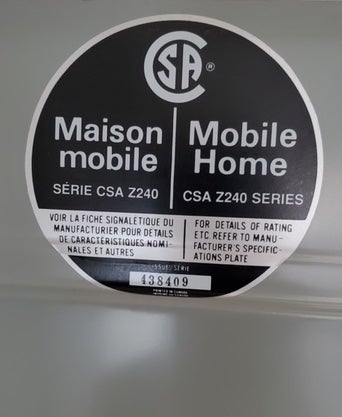
CSA certification and manufactured-home registration are separate matters. A manufactured home may have been built under an applicable certification standard, but its current registry status does not, by itself, establish that certification is present or that all applicable safety requirements have been satisfied. If certification documentation is missing, or the home has undergone alterations, buyers and sellers should investigate what documentation exists and whether any additional approvals or inspections are required. This is particularly important when dealing with older manufactured homes.
What Should Buyers Check Before Purchasing an Exempt Manufactured Home?
If you are considering purchasing a property with a manufactured home listed as “EXEMPT,” there are several important steps to consider.
- Verify the registry status. Obtain the available registry information and confirm the basis for the exemption.
- Confirm ownership and property details. Ensure the manufactured home is properly associated with the land being purchased and that the transaction documents accurately reflect what is being conveyed.
- Investigate electrical certification. Determine whether the home has the appropriate electrical certification and whether any outstanding issues could affect reconnection or occupancy.
- Assess the home's condition and habitability. An exempt status is not a building inspection or a guarantee that the home is suitable for occupancy.
- Review applicable permits and approvals. Depending on the property, its location, and the home's history, additional questions may arise concerning building permits, alterations, plumbing, septic systems, or local requirements.
- Seek professional advice where necessary. If the home's legal status or certification is unclear, consult the appropriate government authority or qualified professional before removing conditions or completing the purchase.
What Should Sellers Know?
If you are selling land with a manufactured home, understanding the home's registry status before listing can help avoid unexpected complications. Gather any available documentation relating to the home's registration, exemption, electrical certification, construction, and subsequent alterations. If the home is not currently habitable, lacks electrical certification, or requires work before it can be occupied, those issues should be investigated before listing and appropriately disclosed to a potential buyer. All manufactured homes must bear the CSA certification label physically on the home. In accordance to the BC Electrical Safety Regulation - if the label is missing or faded/unreadable, the home must be inspected and re-certified by a professional electrician before listing it for sale. An “EXEMPT” status should never be treated as proof that all other regulatory requirements have been met. Addressing these questions early can help buyers make informed decisions and reduce the likelihood of delays during the transaction.